

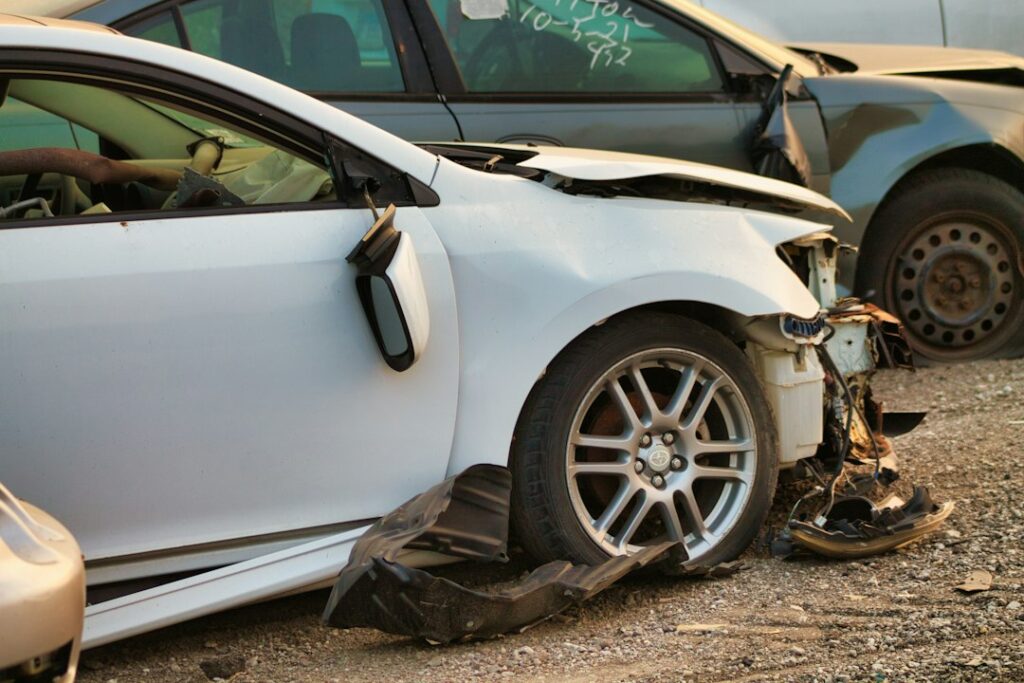
Rear-end collisions are among the most common crashes affecting drivers in Gonzales, LA. They often happen at traffic signals, intersections, congested roadways, school drop-off areas, and during sudden changes in traffic speed.
The driver who strikes the vehicle in front is frequently found responsible, but fault is not automatic in every case. Investigators may examine driver behavior, road conditions, vehicle maintenance, visibility, traffic signals, and whether another person or circumstance contributed to the crash.
Why do rear-end collisions happen?
Most rear-end crashes occur because the following driver fails to leave enough time and distance to stop. Louisiana law requires drivers to follow at a reasonable and prudent distance based on traffic, speed, and highway conditions.
Common causes include:
- Following too closely
- Driving too fast for traffic or weather conditions
- Looking at a phone or another device
- Reaching for objects inside the vehicle
- Failing to notice that traffic has stopped
- Fatigue or briefly falling asleep
- Driving under the influence of alcohol or drugs
- Failing to maintain working brakes or tires
- Misjudging the speed of the vehicle ahead
- Becoming distracted by passengers, roadside activity, or navigation equipment
A driver may be traveling below the posted speed limit and still be driving too fast for conditions. Heavy rain, standing water, glare, fog, darkness, or spray from other vehicles can reduce visibility and increase stopping distance.
Is the rear driver always at fault?
No. The rear driver is often considered the primary at-fault party because that driver must generally maintain enough space to react and stop safely. However, determining legal responsibility requires examining the full sequence of events.
For example, the front driver may share some responsibility if that driver:
- Stops suddenly without a reasonable traffic-related explanation
- Reverses into another vehicle
- Changes lanes abruptly and cuts off the following vehicle
- Has brake lights that are not working
- Drives without required lights in poor visibility
- Fails to use a turn signal when one is reasonably necessary
- Stops in an unsafe location without warning when a safer option was available
A sudden stop does not automatically make the lead driver responsible. Vehicles commonly stop because of pedestrians, traffic signals, turning vehicles, roadway hazards, emergency conditions, or congestion. The key question is usually whether the stop was reasonably foreseeable under the circumstances and whether the following driver had enough opportunity to respond.
How does Louisiana comparative fault affect a rear-end case?
Louisiana generally assigns fault by percentage when more than one person or condition contributed to an injury or loss. A person’s recovery may be reduced according to that person’s share of fault.
For example, if a following driver is found 80 percent responsible and the lead driver is found 20 percent responsible, the damages may be allocated according to those percentages. The specific result depends on the facts, evidence, and legal claims involved.
Other potentially responsible parties may also be considered. These could include a vehicle owner, employer, manufacturer, repair provider, roadway contractor, or another driver. A person who was not directly involved in the impact may still be relevant if that person’s conduct helped cause the crash.
Fault is therefore not decided solely by asking which vehicle made contact from behind. The analysis focuses on what each person did or failed to do before the collision.
What evidence helps show who was at fault?
Evidence from the scene can be especially important because vehicles may be moved, skid marks may fade, and witnesses may leave before information is exchanged.
Useful evidence may include:
- Photographs of vehicle damage and the surrounding roadway
- Images showing traffic signals, lane markings, lighting, and weather conditions
- Names and contact information for witnesses
- The location and position of vehicles before they are moved, when safe to document
- Video from dashboard cameras, nearby security systems, or vehicle recording systems
- Police crash reports
- Phone records or electronic data when distraction is disputed
- Vehicle maintenance and inspection records
- Medical records describing injuries and when symptoms began
- Statements from drivers, passengers, witnesses, or responding officers

Damage patterns can also provide clues. Front-end damage to one vehicle and rear-end damage to another may support a basic impact sequence, but the damage alone does not always establish every detail. Speed, braking, vehicle height, multiple impacts, and roadway position may require further analysis.
Can a driver be partly responsible even if another vehicle hit from behind?
Yes. A rear-end impact may involve shared responsibility. For instance, the following driver may have been too close, while the lead driver may have stopped unexpectedly without working brake lights. In another situation, a third vehicle may have forced the lead driver to stop or merge abruptly.
A chain-reaction crash can make fault more complicated. The first impact may push one vehicle into another, or a vehicle behind may strike with enough force to cause additional damage. Each impact must be evaluated separately when determining how injuries and property damage occurred.
A person’s own actions may also be considered. Failing to wear a seat belt, delaying medical care, ignoring medical instructions, or contributing to the collision can affect different parts of a claim. These issues are fact-specific and should not be assumed from the existence of a rear-end crash alone.
How do local weather and traffic conditions affect these crashes?
Rain and high humidity can create slick pavement, reduced visibility, and longer stopping distances. Water may collect in low areas of a roadway, while glare from headlights or wet pavement can make brake lights harder to see.
Traffic may also slow quickly near busy intersections, construction activity, school-related traffic, turning lanes, and areas where drivers are entering or leaving residential streets. A driver who is following closely in light traffic may have too little space when congestion develops without warning.
Safe driving requires adjusting following distance to the conditions rather than relying on a fixed number of car lengths. More space is generally needed at night, in rain, behind large vehicles, on unfamiliar roads, or when traffic is repeatedly stopping and starting.
What should someone do after a rear-end collision?
After a collision, safety comes first. If possible, move out of active traffic without leaving the scene, turn on hazard lights, and check for injuries. Emergency assistance may be necessary when anyone has pain, bleeding, breathing difficulty, confusion, or other urgent symptoms.
Drivers should exchange required information and avoid arguing about fault at the scene. A person may not feel injured immediately because symptoms from strains, concussions, or other conditions can develop later.
When safe, document the vehicles, roadway, traffic controls, weather, visible injuries, and nearby witnesses. Promptly reporting the collision and seeking appropriate medical evaluation can help preserve an accurate record of what happened.
The most reliable fault analysis considers the complete timeline: what each driver could see, how fast each vehicle was traveling, whether a warning was given, whether stopping was reasonable, and whether another factor contributed to the impact.